Core workout for women: exercises, form, and choices
A core workout can include exercises that help train muscles in your trunk and support overall strength and stability. A good plan starts with exercises you can do well, then gets harder over time by adding load or difficulty, which fits the general guidance from MedlinePlus to build up slowly and keep regular practice. Home, gym, and weighted versions can all be options.
This post covers core exercises, form, beginner options, and ways to choose between home and gym workouts. It also suggests tracking workouts so you can review your progress over time.
What is a core workout for women?
Core training works the trunk
Core training works the muscles around your trunk and can help with stability while you move. Those muscles can help you keep control during movement. Core training can be aimed at function as well as appearance.
Core work includes several movement patterns
Core training can include more than crunches. Core training can include exercises such as dead bugs or planks. Core training can include exercises that challenge control during movement. Core training can include crunch variations. Core training can include side planks or carries.
A mix of exercises may be useful for training different movement patterns. Training a variety of movements may be useful.
You can train core at home or at the gym
A core workout can happen at home or at the gym. You can use bodyweight, dumbbells, kettlebells, or resistance bands, depending on your goals and ability. MedlinePlus says regular exercise helps improve strength and endurance and supports overall health, and it also notes that you do not need fancy equipment to start. A mat can be enough for many exercise sessions. MedlinePlus says regular exercise is one of the best things you can do for your health and that strength training can use weights, resistance bands, or your own body weight.
A core workout can fit alongside other training. If you already lift, core work can be part of your routine. If you are newer to exercise, start with movements you can control. If you want a broader strength base, see our guide to strength training for women.
What are the best core exercises for women?
Reliable core moves
A core workout can use a small set of exercises that emphasize control and breathing. A mix of exercises can fit a routine built around regular practice and gradual progress. MedlinePlus says most people benefit from a combination of exercise types, and that you should build up slowly.
-
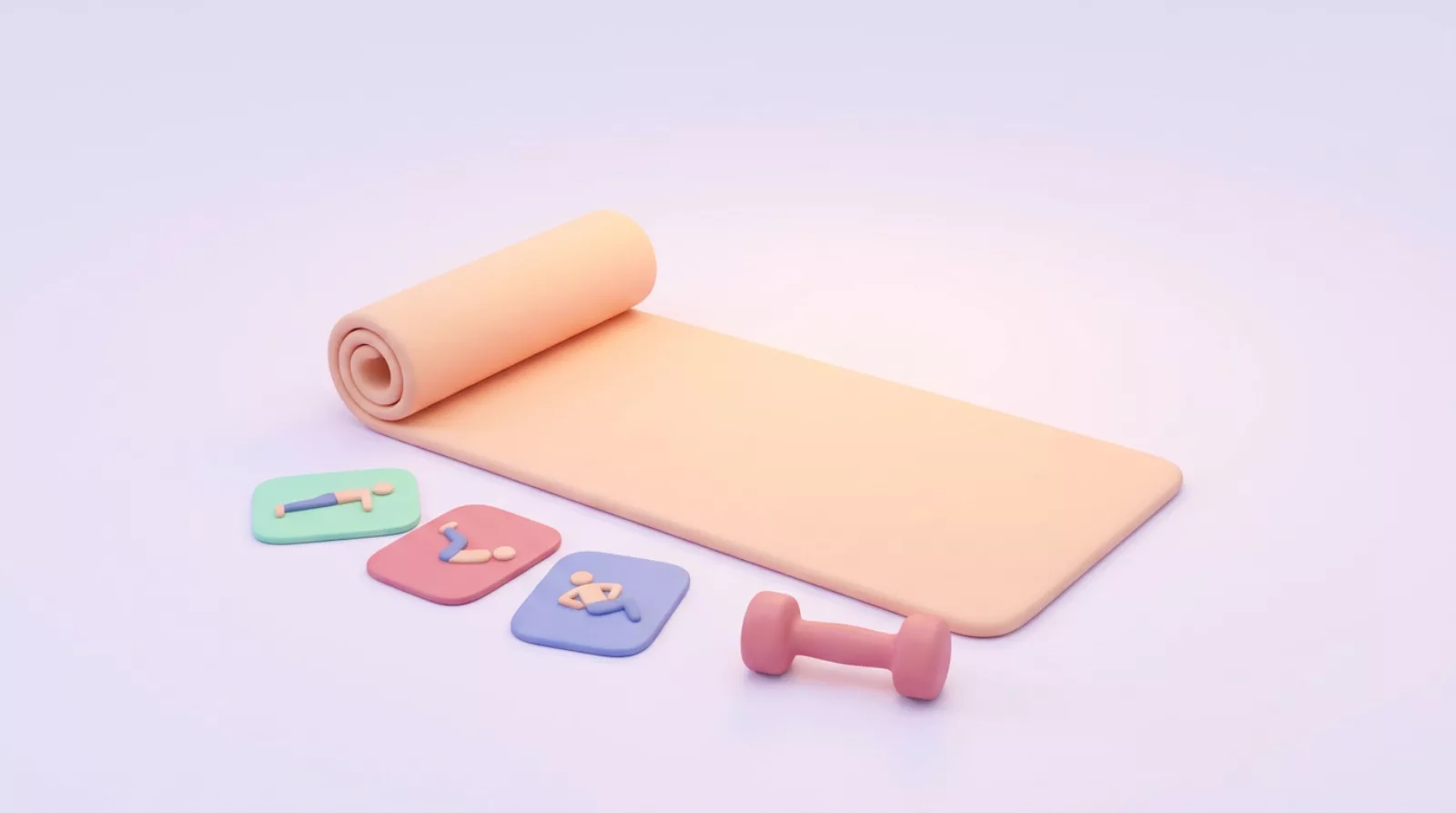
Dead bug. This is a starter exercise for practicing control while your arms and legs move. Make it easier by bending your knees more and moving one limb at a time. Make it harder by straightening the legs more or lowering them closer to the floor.
-
Bird dog. This can train balance and control. Start with short holds. You can progress by changing the reps, pauses, or range of motion.
-
Plank. This is one way to practice bracing. Begin on your knees or with your hands on a bench if a floor plank is too hard. Make it harder by extending the hold, or by lifting one foot or one hand if your form stays solid.
-
Side plank. This trains the side of the trunk. You can bend the bottom knee for an easier version. You can also change the exercise to make it more challenging.
-
Glute bridge. This exercise trains more than one muscle group. It can help train trunk stability during hip movement. A two-leg bridge is one version of the exercise. A single-leg bridge is a more challenging version.
-
Heel tap. This is another core exercise option. Keep your low back steady and tap one heel down at a time. Slow the tempo if you lose control.
-
Loaded carry. A suitcase carry or farmer carry with dumbbells is one practical core exercise option. You walk while keeping your trunk controlled. Start light and short, then add load or distance only when you can stay tall.
A good core exercise is one you can do with good form and appropriate challenge. If you want a full strength base around these moves, see /blog/strength-training-for-women/.
How do you do core exercises with good form?
Start with steady position
Keep your trunk controlled and breathe steadily. Try to avoid excessive arching in your lower back. Move slowly enough that you can feel each rep, and stop the set before your lower back starts taking over. MedlinePlus says regular practice and building up slowly help you get stronger without pushing too hard at once, which fits core work too. MedlinePlus on exercise and physical fitness
Make the exercise easier before making it harder
If a move feels sloppy, scale the load, the range of motion, or the hold time. Reducing range of motion can make some exercises easier to control. A shorter hold can make it easier to maintain position. Once you can repeat the move with the same shape every time, then add a little more load or time.
Common beginner mistakes
Pulling on your neck can be uncomfortable during floor ab work. Keep your hands light and avoid pulling your head forward.
Arching the back is another one. If you lose control, reduce the difficulty or slow down.
If reps are too fast to control, slow them down. Slow the tempo until you can start, move, and finish each rep on purpose. If you want a simple place to start, our guide to strength training for women has the same idea of building from solid basics.
Stop when something feels wrong
A working muscle burn is one thing. Sharp or unusual pain should be taken seriously. Stop the exercise and get checked if that happens. If you notice changes in energy or comfort, adjust your workout as needed.
What is a core workout for women beginner?
A beginner core workout can be a short routine with a few simple exercises done with control and good form.
A simple beginner template
- Dead bug. Do 1 to 3 sets of 6 to 10 reps per side. Keep your lower back gently pressed down and move slowly.
- Heel taps. Do 1 to 3 sets of 8 to 12 reps per side. Tap one heel down at a time and keep your ribs from flaring up.
- Bird dog. Do 1 to 3 sets of 6 to 10 reps per side. Reach long, keep your hips level, and avoid twisting.
- Short plank hold. Do 1 to 3 sets of 10 to 30 seconds. Stop before your lower back sags or your neck tenses.
If you want a fifth move, add a side plank from the knees or a glute bridge. Keep it simple. Rest between sets as needed.
How to make it fit into 20 minutes
Twenty minutes can be enough for some people if the session is focused. You do not need a long session to start. MedlinePlus says even small amounts of exercise can be helpful, and that regular practice matters more than doing everything at once.
A beginner session can include a few exercises with a steady pace. If you are still learning the moves, choose a manageable number of reps and rest as needed.
Home or gym
You can do this workout at home or at the gym. MedlinePlus says you do not need fancy equipment to get started, and that home, gyms, and other places can all work if they fit your life. A mat is enough for dead bug, heel taps, bird dog, and planks. If you train in a gym, you can still use the same routine before or after lifting.
Consistency matters more than a perfect split. If you want a fuller base for strength work later, strength training for women is a useful next read. Track the session, repeat it weekly, and build up slowly instead of trying to make every workout hard.
Core workout for women at home or at the gym: how do you choose?
Your location may change the tools you use, not necessarily the overall goal. A core workout for women can build strength, control, and stability at home or in the gym, and MedlinePlus says you do not need fancy equipment to get started.
Compare your options
| Place | Good tools | What it gives you |
|---|---|---|
| Home | Bodyweight, mat, resistance band, one dumbbell | Easy to start, easy to repeat, useful for short sessions |
| Gym | Dumbbells, cables, machines, mats | More load choices and more ways to make an exercise harder |
| Both | The same basic core moves | Same training goal, different setup |
If you want to use weights, the gym offers more load options, but you can also work out at home with limited equipment. A dumbbell can be used to increase difficulty in some exercises. Bodyweight work can be a good way to start.
Choose the version you will repeat
Pick the setting that makes it easiest to show up often. MedlinePlus says regular practice helps you improve, and even short sessions can help when you build them into your week.
If you train at home, use what you have and keep the session simple. If you train in a gym, the extra tools can help you add load more gradually. Using dumbbells or gym equipment can make it easier to progress.
If you already lift, your core work can sit next to your main strength work. A simple strength training plan for women can include core work after squats, deadlifts, presses, or rows.
The main point
Keep the goal focused on controlled movement and bracing. Home and gym both work. The best choice is the one that fits your day and lets you repeat the work next week.
How should you track your own core training pattern?
Log the full session
Track the exercises, sets, reps, load, and how hard the workout felt. That gives you a record you can compare later, instead of relying on memory after a few weeks of training. MedlinePlus says regular practice and gradual progression matter, so logging makes it easier to see whether you are adding a little more work over time or just repeating the same session.
Add cycle day, sleep, and energy
You can add sleep and energy notes next to the workout. That may help you notice whether sleep or other factors affect how you feel during workouts. Some workout logs let you add notes such as date, sleep, or energy so you can review them later.
If you want a fuller picture, include notes on symptoms or anything unusual that day. A short note like “felt steady on planks” or “low energy, shortened the finisher” can be more useful than a vague rating alone.
Look for your own pattern, not a rule
Patterns are personal. A review on cycle syncing and exercise found that the evidence is limited and does not support one fixed training plan for every phase, so use your log to observe what actually happens in your body. If you notice differences in how your workouts feel, that information may be useful. It does not mean every woman will feel the same way.
Keep the log simple enough that you will keep using it. A few quick fields after each workout are enough to show whether your core training is changing, staying the same, or feeling harder than it should.
FAQ
Is 20 minutes of core enough?
Yes, 20 minutes can be enough to do useful work if you do it regularly. MedlinePlus says even small amounts of exercise can help, and you can build up slowly over time. How much is right for you depends on your age and health.
What kinds of exercise should a core workout include?
A good core workout can include strength, balance, and flexibility work. MedlinePlus says most people benefit from a combination of these types of exercise. Strength work can use your body weight, weights, or resistance bands, while stretching or yoga can help with flexibility.
What are some simple core exercise choices?
MedlinePlus does not list core-specific moves, but it does support using bodyweight, weights, resistance bands, stretching, and yoga in a routine. Those are all practical ways to build strength, flexibility, and stability. You can choose the tools and exercises that fit your space and experience level.
Can you do core workouts every day?
You can move regularly, but MedlinePlus recommends mixing up your workouts to help prevent injuries or burnout. It also says regular practice helps you improve, and even short sessions count. If you train often, build up slowly and vary the type of work you do.
What core exercises are best for women over 40, over 50, or over 60?
The best core exercises depend on your age, health, and how you move and balance. MedlinePlus says your health care provider can help you choose the best type or amount of activity for you. If you have trouble moving or balancing, or worry exercise may not be safe, check before you start.
Should you check with a doctor before starting core workouts?
Yes, you should check with a health care provider if you have trouble moving, balancing, or think exercise may not be safe for you. MedlinePlus says this before starting any exercise routine. That is especially useful if you are returning after time off or have a health condition.
This article is general information, not medical advice. Talk to a doctor about anything that worries you.